
What Does CCTV Surveillance Mean?
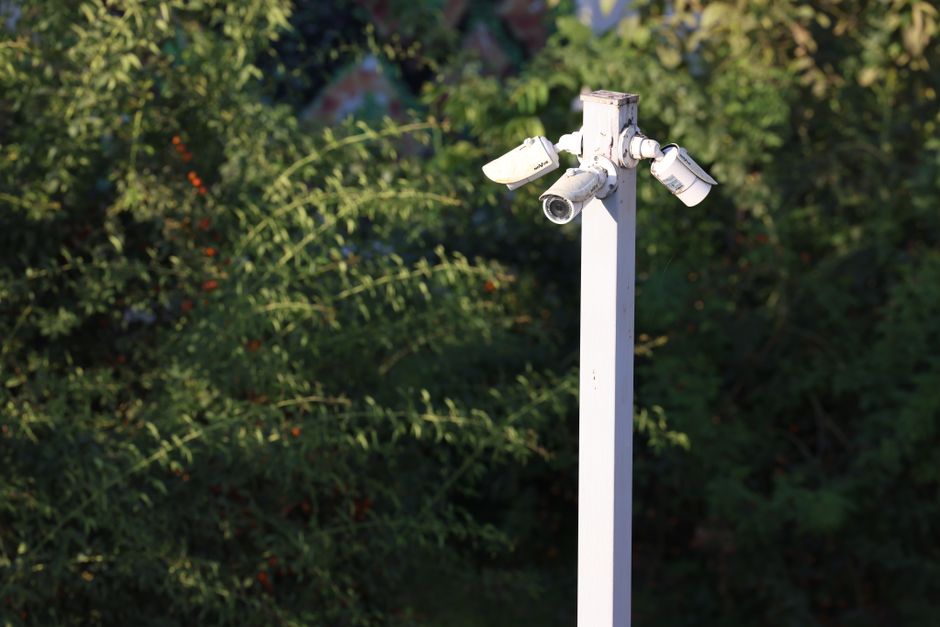
CCTV surveillance is the use of cameras and connected equipment to capture, transmit, display, and store video of a place for monitoring or later review. Unlike surveillance in general, CCTV names a particular closed-circuit video system. Modern systems can send footage by wire or wireless network to a DVR, NVR, local drive, or cloud service; lawful use depends on location, purpose, what is recorded, and local rules.
What is the meaning of CCTV surveillance?
CCTV means closed-circuit television. The Royal Canadian Mounted Police describes it as an electronic surveillance system made up of cameras, monitors, recording equipment, and related technology used to monitor a space. A system can be as small as one camera and monitor or as large as a network of hundreds of cameras.
The word “closed-circuit” points to a system in which video is sent to designated equipment or users, rather than broadcast as ordinary television. The RCMP describes CCTV as capturing, transmitting, displaying, and storing imagery. Those are distinct jobs: a camera captures a scene, a connection carries the video, and a monitor or recorder lets someone view or preserve it.
The system has changed as image quality, wired and wireless signals, and digital storage have advanced. That change affects the equipment, not the basic idea: CCTV is a system for observing and recording video from a place.
What is the difference between CCTV and surveillance?
CCTV is one method of surveillance; surveillance is the broader activity of observing or monitoring people, places, or events. It can involve video cameras, but the term also covers other ways to monitor activity. CCTV specifically refers to a video system and the equipment used to handle its images.
This distinction helps clarify what a camera does and what a policy governs. A CCTV system describes the technical chain that makes and handles video. Surveillance describes the purpose and practice of monitoring. A camera can record video without anyone watching live, while saved footage can later support review or analysis.
NIST notes that video storage serves both real-time monitoring and later analysis, including evidentiary and forensic uses. The same camera system can therefore be used for live observation, later review, or both. The purpose should be clear before deciding where cameras point, who can view recordings, or how long files remain available.
How does a CCTV surveillance system record and store video?
A CCTV system records by capturing video at a camera, transmitting it to recording equipment or a network, and saving it on local or remote storage. The path differs by system: some cameras connect by cable, while others send video wirelessly or over an IP network.
In a DVR system, video is encoded and processed at the recorder. The RCMP notes that DVRs can overwrite older footage, so the recording period depends in part on available capacity and system settings. In an NVR system, cameras send digital video over an IP network; the U.S. Department of Homeland Security explains that video is encoded and processed at the camera before it reaches the NVR. NVR footage can be stored on local drives or remote cloud servers.
Wired and wireless connections make different trade-offs. Cables provide a physical connection; wireless transmission can make camera placement more flexible, but the RCMP warns that wireless systems are more vulnerable to interference and interruptions. A wireless camera can still feed an NVR or cloud service, so “wireless” does not mean “no recording system.”
Storage needs grow with the amount of detail and video recorded. NIST identifies frame rate, resolution, and compression as factors that determine capacity, noting that some uses can require terabytes of storage. Lowering the bit rate can save space, but NIST warns that lost detail may be irretrievable. Storage planning therefore links image quality to retention needs: keeping more footage at a given quality requires more capacity.
Before recording, set out the system’s purpose, who needs access, and how long footage is useful. Review whether continuous recording is necessary or whether the system can capture only relevant areas or events. This turns storage from an open-ended archive into a tool sized for a defined job.
Is it illegal to have CCTV at home or work?
Having CCTV is not automatically illegal, but the rules depend on where the cameras are, what they record, why they are used, and whether they capture audio or private spaces. Legal requirements vary by country and region, so guidance from the UK or U.S. sources below should not be treated as a universal rule.
For UK home systems, the ICO advises positioning cameras to capture only the owner’s property where possible. If a camera records beyond the boundary—such as a neighbor’s garden, a shared space, or a public area—UK data protection law can apply. The UK government also advises thinking about camera placement, continuous recording, and whether audio is needed.
Organizations in the UK must identify and document a lawful basis under Article 6 of the UK GDPR, according to the ICO. The ICO also says there is no universal minimum or maximum retention period under UK GDPR and the Data Protection Act: the purpose determines how long footage is needed, and material should not be kept longer than necessary. Access should be limited to authorized people.
Audio deserves separate attention. The ICO says audio recording is generally more intrusive than video alone and organizations should normally disable it unless they can justify and evidence a specific need. A practical privacy check is to review the camera’s field of view, mask neighboring or sensitive areas with privacy filters, set motion zones where available, post any notice required locally, secure recordings, limit access, and delete footage when its purpose has passed. These steps reduce avoidable capture; they do not replace checking the law that applies to the location.
Frequently Asked Questions
Can my CCTV camera record my neighbor’s property?
Rules vary by location. The UK ICO advises aiming cameras at your own property where possible and using privacy filters or blockers to mask areas outside it. In the UK, data protection obligations can apply when a home camera captures neighbors’ property, shared spaces, or public areas.
How long should CCTV footage be kept, and who can access it?
Keep footage only for as long as its stated purpose requires; there is no universal retention period under UK GDPR and the Data Protection Act. Store it securely and restrict access to authorized people. The appropriate period and access rules depend on the jurisdiction and the reason for recording.
Is CCTV still a thing when security cameras can use Wi-Fi and cloud storage?
Yes. CCTV refers to the video surveillance system, not only to older cameras connected directly to television monitors. Internet-connected cameras, network video recorders, and cloud storage are modern ways to transmit and store surveillance video.
Sources
- Royal Canadian Mounted Police, Lead Security Agency for Physical Security
- U.S. National Institute of Standards and Technology, Video Quality in Public Safety
- UK Information Commissioner's Office, Home CCTV systems
- UK Information Commissioner's Office, Guidance on video surveillance and the data protection principles
- UK Government, Guidance on the use of domestic CCTV
- U.S. Department of Homeland Security, Video Security Systems Technology Handbook

How to Compare Phone Deals by Their Total Cost
Compare phone sales by adding plan costs, fees, trade-in credits, and unlock conditions—not just the advertised device price.
Laser Welder Cost: Price the Machine and a Safe Setup
Compare listed laser-welder prices with power, gas, consumables, accessories, and safety requirements before you buy.

How to Compare Hearing Aids in 2026: Fit, Phones and Cost
Compare OTC and prescription hearing aids by fit, speech benefit, phone compatibility, streaming battery use, and follow-up support.