
How Can I Build Stronger, More Muscular Legs?
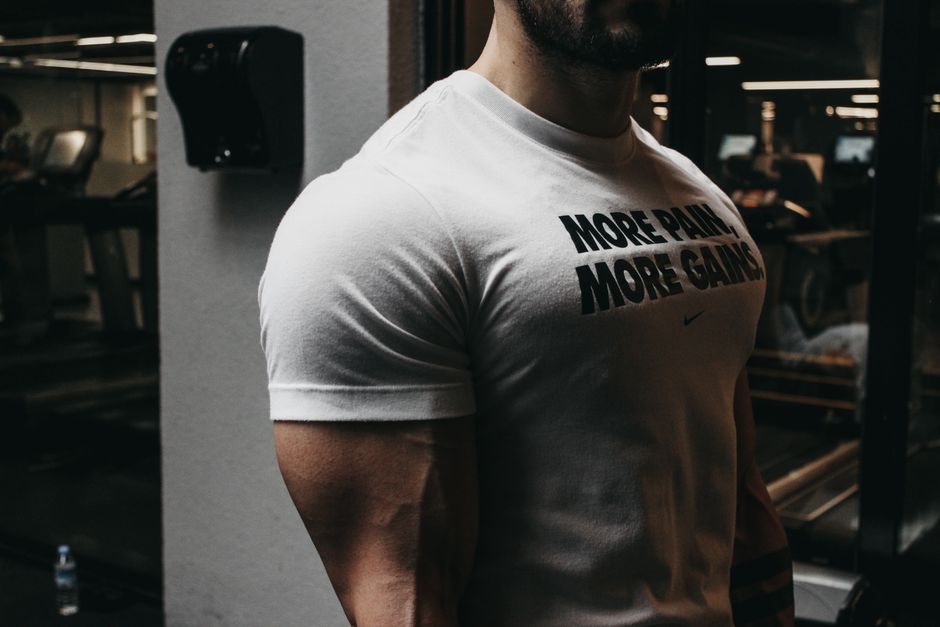
Build stronger, more muscular legs by progressively challenging your quads, hamstrings, glutes, and calves with exercises you can perform consistently. Heavy weights are not required for muscle growth: research finds similar hypertrophy across lighter and heavier loads when sets reach a challenging effort. Train all major muscle groups at least twice weekly for general health, and adjust exercise range, support, and resistance to your equipment, recovery, and joint symptoms.
What exercises build stronger, more defined legs?
Exercises that train the knee, hip, and ankle through controlled movement build a more complete leg routine. Pair a knee-bending exercise with a hip-hinge or leg-curl pattern, then add a calf raise. This covers the main muscles without relying on a single lift.
For quads, use squats, split squats, step-ups, or leg presses when available. For hamstrings and glutes, use hip hinges such as Romanian deadlifts, glute bridges, or hamstring curls. Standing or seated calf raises add direct calf work. Choose a version you can do with control and repeat from session to session.
Progressive training means making the work more demanding over time. Add repetitions, resistance, range of motion, or a more challenging variation once you can complete your current work with steady form. Keep a simple record of the exercise and repetitions; it makes gradual progress visible without requiring costly equipment.
A review by Lopez and colleagues, published in Medicine & Science in Sports & Exercise, compared resistance training loads performed to volitional failure across 28 studies and 747 healthy adults. It found no significant difference in muscle hypertrophy across low-, moderate-, and high-load training. Heavier loads produced greater strength gains, so lighter resistance can support muscle growth while heavier work is more specific to maximal strength. The review does not mean every easy set is enough: the sets studied were taken to a challenging effort. Read the systematic review on resistance-training load.
Can I build leg muscle at home without heavy weights?
Yes. Body weight, bands, and household-safe ways to add resistance can make leg exercises challenging; the key is progressive effort, not a particular machine. The CDC lists body weight and elastic bands as resistance options for muscle-strengthening activity.
Start with a movement you can control, such as a chair squat, split squat while holding a stable support, glute bridge, or calf raise. When a variation becomes easy, increase repetitions, slow the lowering phase, use a longer range you can tolerate, or move to a harder single-leg version. A resistance band can add load to knee extensions, curls, or hip movements. Keep the setup stable and do not use objects that can slip or break.
Home training has a ceiling: without heavier resistance, maximal strength gains can be harder to target. The load review by Lopez and colleagues found that strength gains were greater with moderate and high loads than with low loads. Muscle growth, by contrast, did not significantly differ by load in the included studies when training reached volitional failure. A challenging band or bodyweight set can therefore be useful for muscle, even when it does not mimic heavy barbell training.
Equipment does not need to be all-or-nothing. If you have a band but no weights, use the band for curls or extensions and body weight for squats and bridges. If you have only a chair and a clear floor, use supported sit-to-stands, bridges, and calf raises, then make one element harder at a time. Consistency and a trackable progression matter more than collecting exercise variations.
How often should I train my legs for muscle growth?
Train the legs on at least two days each week as a practical starting point, while leaving enough recovery to repeat strong, controlled sessions. The CDC recommends muscle-strengthening activity on at least two days weekly for adults, covering all major muscle groups, including legs and hips. That is general-health guidance, not a fixed muscle-growth prescription.
One option is to train the whole lower body twice weekly. Each session can include a quad-focused movement, a hamstring or hip-focused movement, and calf work. Another option is to split the movements across sessions, provided the weekly routine still covers those muscle groups and allows recovery. The right schedule depends on how much work each session contains and how well you recover between them.
A 10-week study by Rossi and colleagues had squat-only, leg-press-only, and combined-training groups complete two lower-body workouts per week, with six sets per session at 8–12 RM. Squat training transferred better to maximal squat strength than leg-press training, while outcomes depended on the task. The study measured strength, body composition, and function; it did not directly establish which exercise grew bigger quadriceps. See the study comparing squat and leg-press training.
Use the schedule as a frame, not a contest. If performance drops from session to session or joint symptoms worsen, reduce the work or change the movement. If repetitions and control improve and recovery is steady, progress one training variable at a time. The CDC adult activity guidance supports bodyweight and band-based strengthening as valid ways to work the major muscle groups.
Frequently Asked Questions
Do squats or leg presses build bigger quads?
Both can train the quads, but the cited comparison measured strength, body composition, and functional outcomes rather than direct quadriceps size. It found that strength gains transferred best to the task practiced, so it does not establish that either exercise grows bigger quads.
How can I train my legs if squats bother my knees?
Try a smaller, comfortable range of motion or another movement, such as supported mini-squats, standing back-leg slides, seated knee extensions, or band curls. The Arthritis Foundation advises adapting exercise to ability and symptoms, beginning with low effort and increasing gradually.
The Foundation's knee osteoarthritis exercise guidance suggests beginning with one set of 3–4 repetitions and working up to 8–10 as strength improves, with sets increased gradually up to three. Those figures are from its guidance, not a universal prescription for every person or knee condition. If pain persists or changes, a health professional can help identify appropriate movements. The Arthritis Foundation outlines knee-friendly strengthening options.
Leg training works when the target muscles meet a repeatable challenge. Choose movements your joints tolerate, then make the work harder in small, trackable steps. Heavy equipment is one route. It is not the only route.
Sources
- Lopez et al., Medicine & Science in Sports & Exercise: resistance-training load and hypertrophy
- U.S. Centers for Disease Control and Prevention: Adult Activity—An Overview
- Rossi et al., Journal of Sports Medicine and Physical Fitness: squat and leg-press training
- Arthritis Foundation: 6 Exercises for Knee OA Pain
Disclaimer: This article is for general information only and is not medical advice. It is not a substitute for diagnosis or treatment by a qualified healthcare professional. Always speak to your doctor before acting on anything you read here.
Adult Dance Class Costs: Compare Drop-Ins, Packs, and Memberships
Compare adult dance class drop-ins, packs, memberships, and trial offers by total cost, expiration rules, and cancellation terms.

How Long Does It Take to Lose 10 kg Safely?
A realistic timeline for losing 10 kg, what changes the pace, and how to build a sustainable calorie deficit without crash dieting.